Framework
A, B and C Players
A model for profiling a team honestly and putting leadership time where it compounds.
The steps
- Profile every person as an A Player, a B+ Player with the potential to be an A or out of form, or a B- Player without that potential.
- Rate each person relative to their role and level, not against the most senior person on the team.
- Look for effort displayed as evidence, which is the B-Player tell, and coach to outcomes instead.
- Put most of your time on the A and B+ Players, and remove the barriers that slow them down.
- Be honest that the barrier is sometimes a B- Player, and act on it.
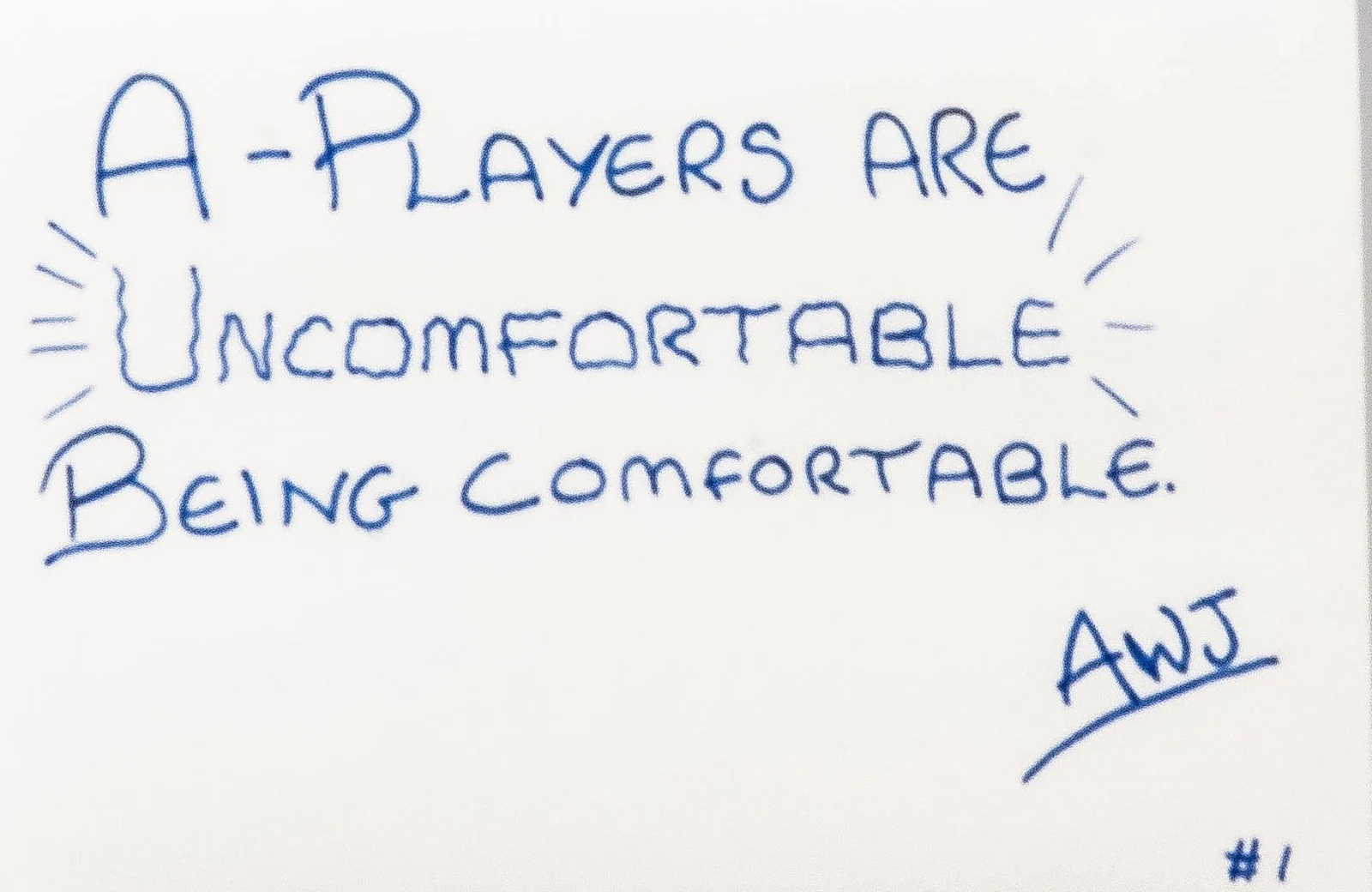
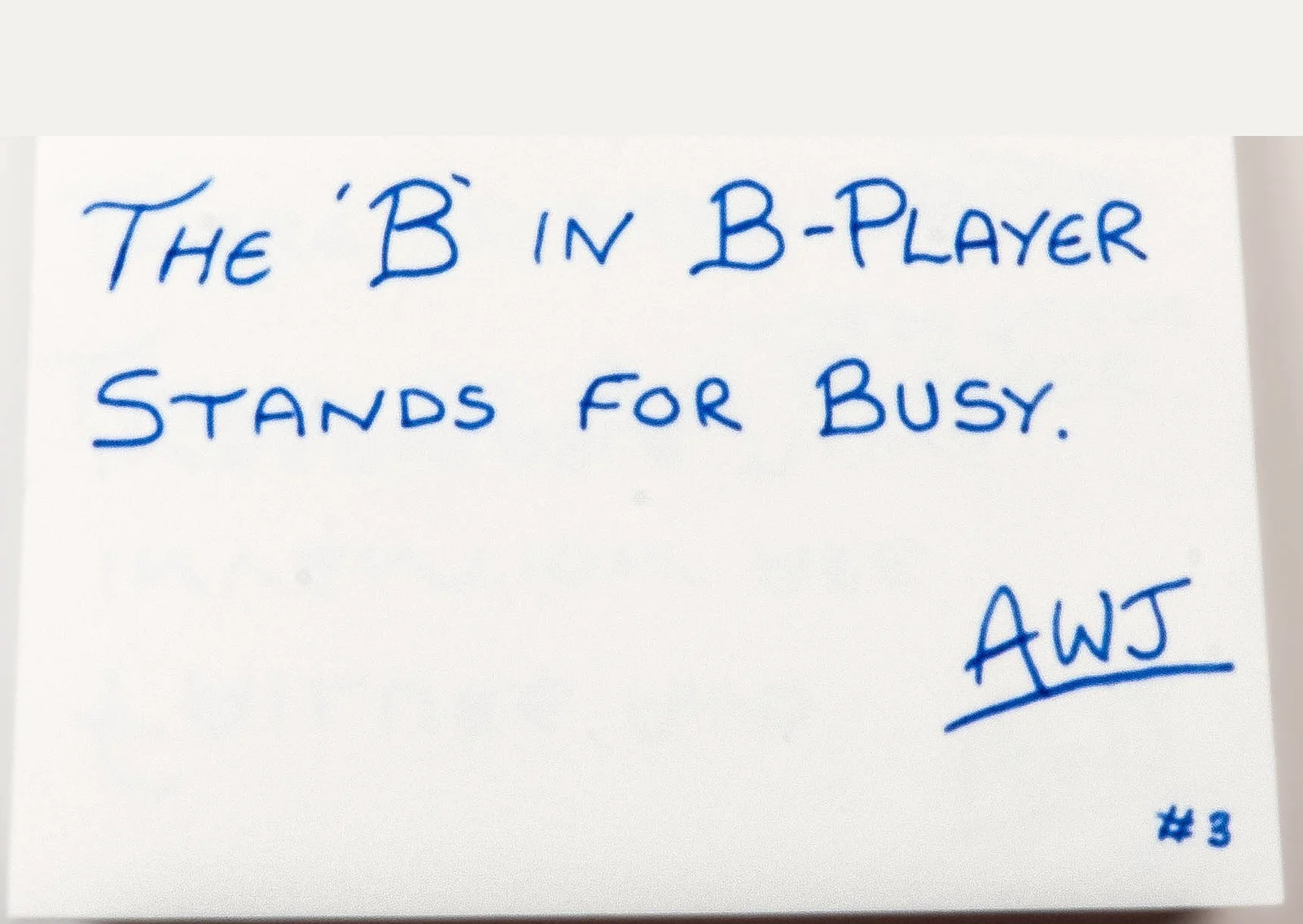
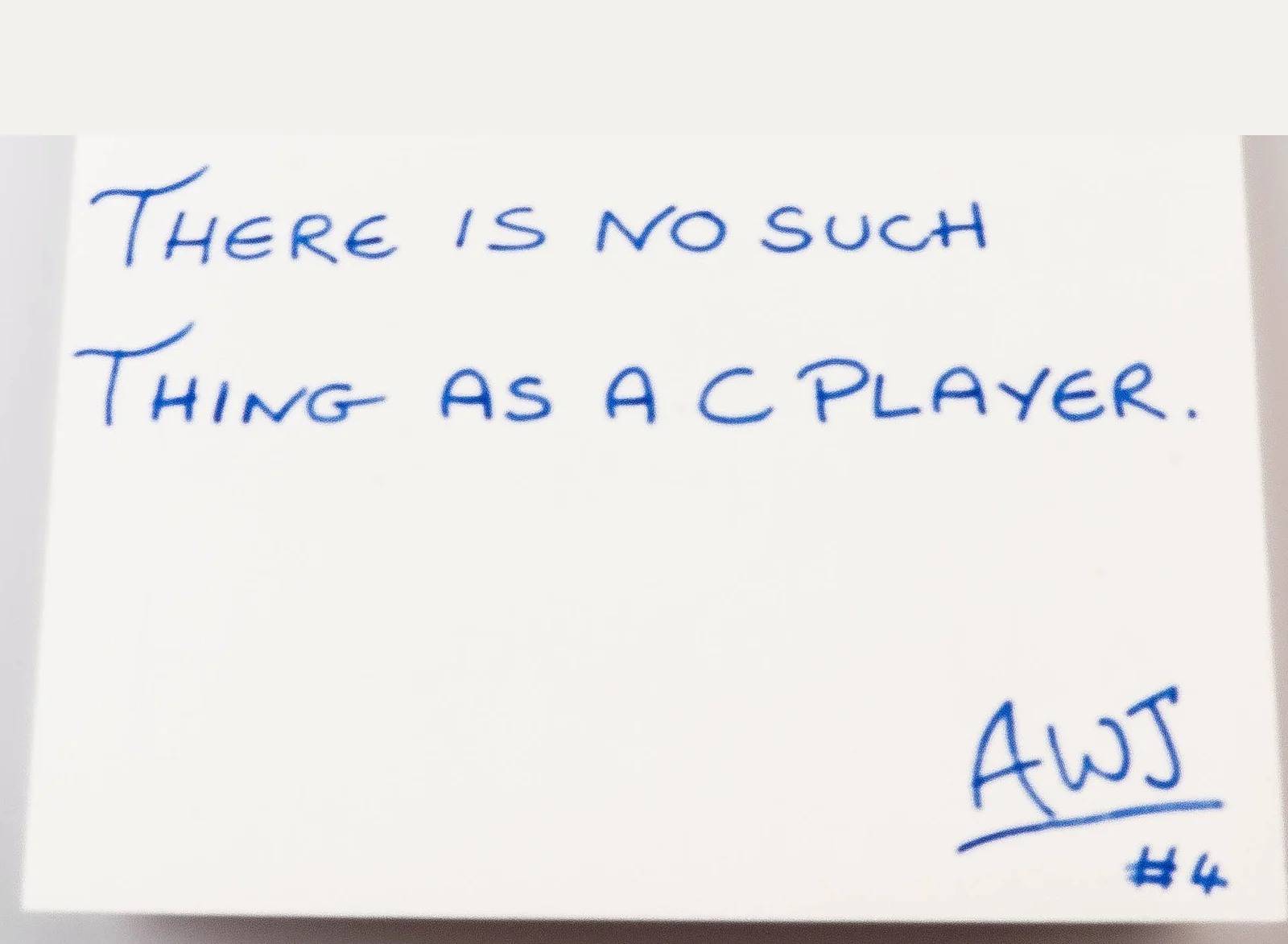
The model has three parts, and each one is a Maxim. A Players are uncomfortable being comfortable. The B in B-Player stands for busy. There is no such thing as a C Player.
A Players are driven by an unreasonable demand to reach their own potential. They want clear goals, they thrive on accountability, and they measure themselves on impact. Stagnation is pain to them. Roger Federer at 33, with 17 Grand Slams, hiring a new coach to rebuild his backhand in public, is the picture. B Players focus on optics. They avoid clarity, dodge accountability and spend their energy managing perception. The tell is effort displayed as evidence: the AE with 27 open opportunities, all yellow or red, defending every one with “I’m working it hard”. He is working it hard. He is also the lowest performer on the team. And C Players do not exist, or at least should not. Professional sports teams have no room for them. Neither does yours.
It exists because leaders put their time in the wrong place. Profile a team honestly and you get A Players, B+ Players who have the potential to be an A or are temporarily out of form, and B- Players who do not have the potential. Most leaders spend a disproportionate share of their week on the B- group. The A Players, who would grow fastest with that attention, are left to get on with it, and the barriers in their way, which are often the B- Players themselves, stay where they are.
How to run it
Profile every person, privately and honestly. Rate them relative to their role: a first-year AE and a ten-year veteran can both be A Players, and the junior one will not be as strong in absolute terms. Allow for form, because A is subject to it, and even the best lose their A game for a quarter.
Then allocate your time. Growth plans and stretch for the As. Clear goals, feedback and a fair window for the B+ group to show which way they are going. A direct conversation with the B- group, early, because feedback is like milk and it sours. Then remove barriers. Ask each A Player what slows them down and fix it.
Where it breaks
It breaks when the labels become permanent. Form changes, people grow, and a B+ who gets the right coaching becomes an A. It breaks when A is confused with loud, senior or busy, which is how B Players get promoted. It breaks when the leader uses it as a sorting exercise rather than a coaching one, because the point of the model is to decide where your time goes, and the answer is almost always more on the As than you are currently spending.
And it breaks when you do not act on the B- conversation. Knowing someone does not have the potential and keeping them anyway is the most expensive kind of comfort, for them and for you.
From the journal