
Topic hub
MEDDPICC and MEDDICC
The common language for qualification, methodology and value selling behind the best-run sales teams in the world, explained by the person who wrote the book on it. What the letters mean, where teams get it wrong, and how I want it used.
Where I stand
Most teams use MEDDPICC as a checklist filled in after the meeting. I want it used as a set of questions asked before the meeting, so the letters tell you what you still do not know and the gaps become the plan. In a deal review, inspect the deal, not the rep: evidence or gap, never effort. And when the letters will not fill, qualify out. Nobody regrets it.
Most teams I meet are running MEDDPICC as a form. Eight fields in the CRM, filled in after the meeting, scored by the rep, admired by the manager, and about as useful for forecasting as a horoscope.
I wrote the book on it. I did not write it so you could fill in a form.
MEDDPICC is a common language. One set of words a team uses for qualification, for its methodology and for value selling, so that when a rep says Champion, the manager, the forecast and the customer all mean the same thing. It is also a set of questions. Each letter is something you need to know about a deal before you can say you understand it. Ask the questions before the meeting and they tell you what to go and find out. Ask them afterwards and they tell you what you missed. The letters only do their job when you are honest about the gaps.
What the letters mean
MEDDIC is the original. Dick Dunkel and Jack Napoli built it at PTC. Six letters, each one a thing you must know about a deal.
Metrics. The quantifiable value the customer gets from you, in numbers they would defend in their own boardroom and in their words rather than yours.
Economic Buyer. The person with discretionary control of the budget. The one who can say yes when everyone else has said no, and no when everyone else has said yes.
Decision Criteria. The formal and informal standards the customer will use to choose. Yours, if you got there first. Your competitor’s, if they did.
Decision Process. The steps, the people and the timing between a decision being made and a contract being signed.
Identify Pain, or as I prefer it, Implicate the Pain. Finding the pain is the easy bit. The work is tying that pain to its cost, and your solution to its relief, until the customer can feel what doing nothing costs them.
Champion. A person with power and influence who sells for you when you are not in the room. A Champion wants you to win because your winning helps them win.
MEDDICC adds a second C for Competition. Anyone or anything competing for the same budget, and that includes doing nothing. The competitor I have lost to most often in twenty years never had a sales team.
MEDDPICC adds a P for Paper Process. Legal, procurement, security. The part of the deal that slides a forecast from this quarter into next in the final week, because nobody asked in month one who signs, who reviews, and how long their queue is.
MEDDIC, MEDDICC or MEDDPICC?
Use the longest one. The thinking is identical across all three. The extra letters stop you pretending that Competition and Paper Process are somebody else’s problem. Nobody ever lost a deal because they understood too much of it.
One letter I would not add is a third C for Compelling Event. If you need an extra letter for urgency, you have missed the point of three you already have. Pain plus Metrics plus a Champion is urgency. A compelling event is what you get when those three are real. The end of your quarter is not one, and the customer does not care about it.
Checklist or questions?
Here is how the checklist version goes wrong. A deal review, any company, any quarter.
Manager: “Who is the Economic Buyer?”
Rep: “Eve. The CFO.”
Manager: “Have we met her?”
Rep: “Charlie says she is fully on board.”
Manager: “Right. Green it is.”
What that team has is a Champion’s opinion of an Economic Buyer. What they have written down is an Economic Buyer. The CRM cannot tell the difference, and by the time the forecast call comes round, neither can the manager.
The questions version runs the other way. Before the next meeting with Charlie, the rep writes down what she knows about each letter and how she knows it. Economic Buyer: named, never met, status second-hand.
That is now the agenda. The meeting exists to get Charlie to put her in front of Eve, or to find out why he will not. MEDDPICC has told the rep what to do on Tuesday. That is what it is for.
A checklist measures how confident the rep feels. Questions measure how much evidence the deal has. Only one of those forecasts anything.
Inspect the deal, not the rep
Deal reviews turn into box-ticking because they turn into interrogations. The rep is on trial, so the rep defends. Worked, chased, pushed, nurtured. Effort verbs. None of them are MEDDPICC.
Put the deal on trial instead. Four questions, in order:
- Do we belong in this deal?
- Where is the deal strong for us?
- Where is it weak, and for what reasons is it weak?
- What actions move it forward?
Run it that way and the rep stops defending and starts thinking, because the review is now helping her win. The leader learns something true about the forecast. If you cannot articulate the Champion’s economic case in three sentences, the deal is not real, and no amount of effort makes it real.
Nobody regrets qualifying out
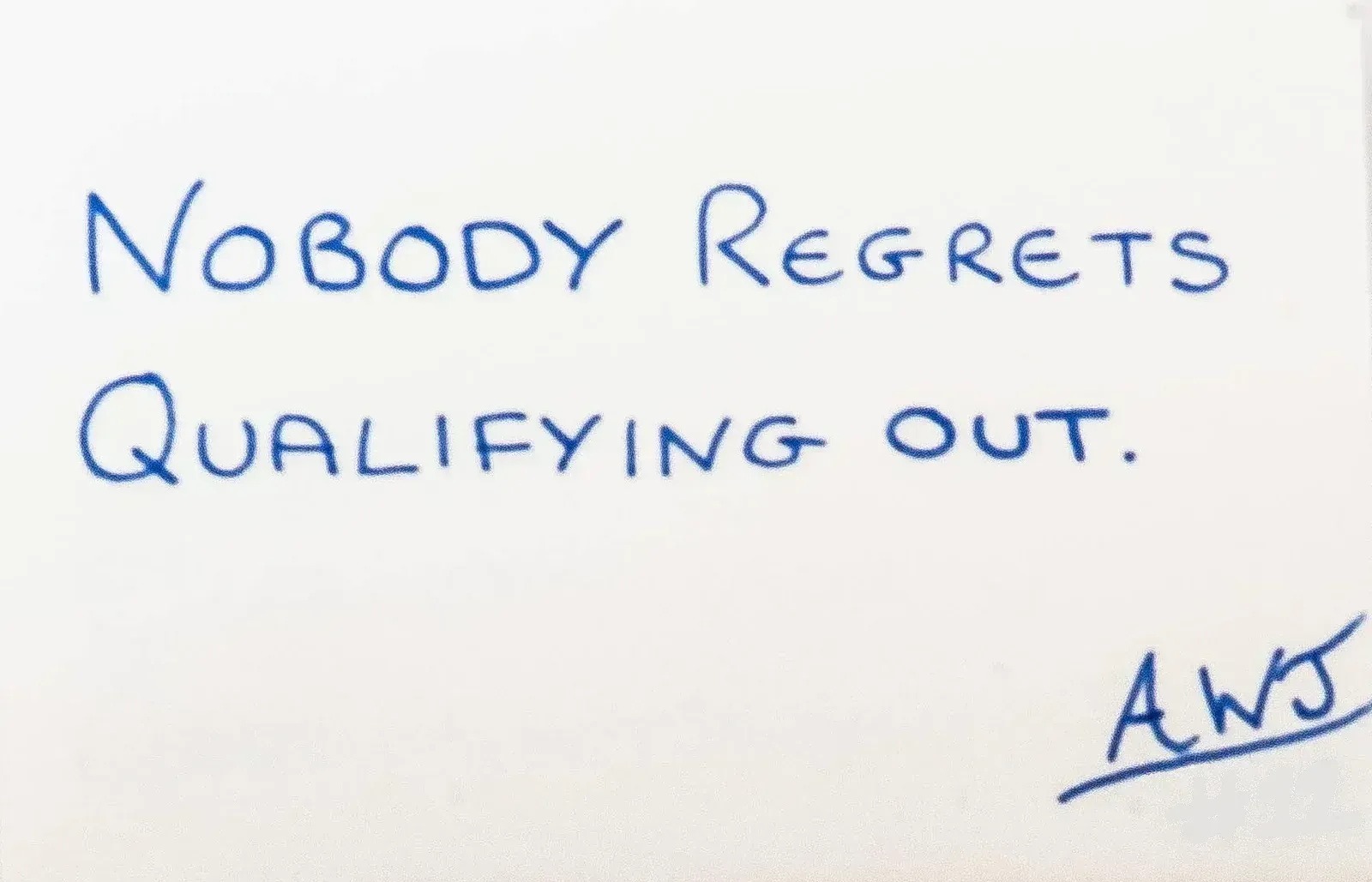
The hardest part of MEDDPICC is what you do when the letters come back empty. I coined “Nobody regrets qualifying out” to give sellers permission to walk, and I have never seen it proved wrong. One of two things happens. Either you were right, and the opportunity was never worth the time, or the customer’s behaviour corrects and they start treating the engagement with the respect a real deal deserves.
Twenty years in sales taught me that the deals which hurt were never the ones I qualified out of. They were the ones I kept in the forecast because the form looked full.
Everything above is the thinking. The letter-by-letter detail, with the deals behind it, is in the book, which has sold over 100,000 copies. If you want your team trained and certified on it, that work happens at meddicc.com, where the MEDDICC Masterclass has more than 35,000 graduates. The glossary on this site defines every term.
Now do one thing. Take your biggest open deal. Write the eight letters down the left of a page. Next to each one, write what you know. In a third column, write how you know it.
How many of the eight survive the third column?
From the journal
The Maxims on this subject.
Questions answered
The things people actually ask.
What is MEDDICC in sales?
MEDDICC is a common language for complex B2B sales, used for qualification, methodology and value selling. Each letter names something you must know about a deal before you can trust it in a forecast: Metrics, Economic Buyer, Decision Criteria, Decision Process, Implicate the Pain, Champion and Competition. It does not tell you what to say in a meeting. It tells you what you still do not know, so you can go and find out before the customer decides without you.
What is the difference between MEDDIC, MEDDICC and MEDDPICC?
MEDDIC is the original six letters, created by Dick Dunkel and Jack Napoli at PTC. MEDDICC adds a second C for Competition, which includes the customer doing nothing. MEDDPICC adds a P for Paper Process, the legal, procurement and security steps that decide whether a deal signs this quarter or next. The thinking is the same in all three. The longer versions simply refuse to let you ignore the two things that most often kill a forecast.
What does each letter of MEDDPICC stand for?
Metrics, the quantifiable value the customer gets. Economic Buyer, the person with discretionary control of the budget. Decision Criteria, the standards the customer will use to choose. Decision Process, the steps and people between decision and signature. Paper Process, legal and procurement. Implicate the Pain, called Identify Pain in the original, tying the customer's pain to its cost and your solution to its relief. Champion, the person with power who sells for you when you are not in the room. Competition, anyone competing for the same budget, including doing nothing.
Who created MEDDIC?
Dick Dunkel and Jack Napoli created MEDDIC at PTC. Andy Whyte wrote the book MEDDICC, which explains MEDDIC, MEDDICC and MEDDPICC letter by letter, and Dunkel and Napoli contributed the foreword and commentary to it. The book has sold over 100,000 copies and is the highest-rated book on MEDDIC and MEDDPICC on Amazon.
Is MEDDPICC a sales methodology or a qualification framework?
Neither label is big enough. MEDDPICC is a common language, and teams use it for three things. Qualification: does this deal have the evidence to sit in the forecast? Methodology: every stage, deal review and forecast call asks the same questions in the same words. Value selling: Metrics and Implicated Pain are the customer's value, in the customer's words. It does not tell you what to say in a discovery call. It tells you what you still do not know, so every meeting has a purpose: close the gaps in the letters. Call it a framework if you like. Treating it as a script, or as a form, is where teams go wrong.
How do you use MEDDPICC to qualify a deal?
Write the eight letters down the side of a page and, next to each, what you know and how you know it. Where the evidence is second-hand or missing, you have a gap, and the gaps become the agenda for the next meeting. Do this before the meeting, so the letters tell you what to find out, rather than afterwards, when it only tells you what you missed. If the gaps will not close, qualify out.
Why do sales teams fail with MEDDPICC?
Because they use it as a checklist filled in after the meeting instead of a set of questions asked before it. The rep scores their own deal, the CRM turns the scores green, and the forecast inherits the rep's confidence rather than the deal's evidence. The fix is to inspect the deal, not the rep: ask how we know each letter, treat opinion as a gap, and make the gap the plan.
How do you identify the Economic Buyer in a deal?
Ask who can say yes when everyone else has said no, and no when everyone else has said yes. The Economic Buyer has discretionary control of the budget, which means they can release it, grow it or move it without asking anyone above them. A title is a clue, never proof. Your Champion will know who it is, and a real Champion will get you in front of them. If nobody can, you have not found the Economic Buyer yet.
What is the difference between a Champion and a Coach?
A Champion has power and influence and sells for you when you are not in the room, because your winning helps them win. A Coach likes you, gives you information and wants to help, but cannot or will not move the deal inside their organisation. Most reps who say they have a Champion have a Coach. The test is simple: what has this person done for the deal while you were not there?
When should you qualify out of a deal?
When the letters come back empty and will not fill. No access to the Economic Buyer, no Champion who acts, no Pain the customer has quantified, no Decision Process with dates on it. Nobody regrets qualifying out. Either you were right and the opportunity was never worth the time, or the customer's behaviour corrects and they treat the engagement with the respect a real deal deserves. The deals that hurt are the ones you keep because the form looked full.