Framework
Qualifying Out
A decision rule for walking away from deals that fail qualification, so your time goes where it wins.
The steps
- Name the gap in MEDDPICC terms: no Economic Buyer access, no Champion, no agreed Metrics, or no reason to act this year.
- Set a dated action that would close the gap and tell the customer plainly what you need from them.
- If the date passes and nothing moves, make the decision to qualify out and say so to the customer.
- Record the reason in one sentence, so the pipeline and the forecast tell the truth.
- Watch what the customer does next, because walking away often brings the deal back on better terms.
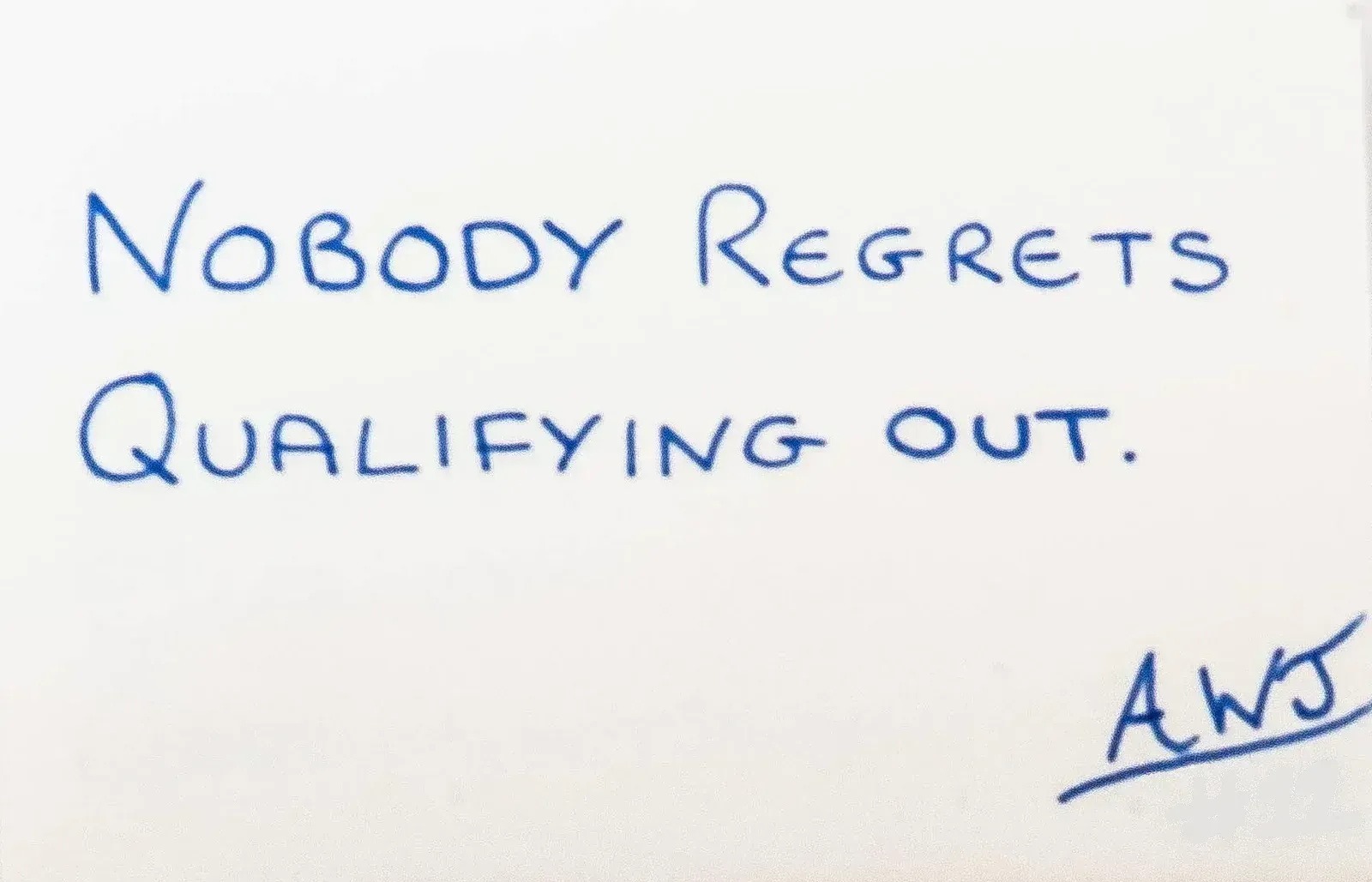
Qualifying out is the decision to stop working an opportunity because it fails qualification. It is deliberate, it has a reason you can say out loud, and it is one of the most underused moves in sales. Nobody regrets qualifying out. I coined that line to give sellers permission, and in all the years since I have not found the exception.
It exists because pipeline has a cost. Every hour spent on a deal with no Economic Buyer access, no Champion and no reason to act this year is an hour taken from a deal that has all three. Sellers know this and still hold on, because killing a deal feels like admitting failure and a fat pipeline feels like safety. It is not safety. It is a coverage number that the leadership team is relying on and that will evaporate in the last two weeks of the quarter, when it is too late to replace.
How to run it
Start with the gap, named in MEDDPICC terms. Not “it has gone a bit quiet” but “we have never met the Economic Buyer and the Champion has not been able to get us there in six weeks”. Then set one dated action that would close it, and be direct with the customer about what you need. “For this to make sense for both of us, I need thirty minutes with your CFO before the 20th.”
If the date passes and nothing moves, decide. Tell the customer, politely and without drama, that you are stepping back until the conditions change. Write the reason down in one sentence so the forecast is honest. Then watch.
One of two things happens, and both are a win. Either you were right, the deal was never going to close, and you have your time back. Or the act of walking away changes the customer’s behaviour. The Economic Buyer who could not find a slot finds one. The procurement process that was going to take ninety days takes thirty. The Coach who could not help you finds some power they had been keeping in reserve. People treat an engagement with more respect when they see it can be withdrawn. You cannot bluff this. You have to mean it.
Where it breaks
It breaks when it is used as an excuse. Qualifying out of a hard deal is not the same as qualifying out of a bad one, and sellers who walk away from every deal that needs real work are avoiding, not qualifying. The gap has to be real, named, and tested with an action first.
It also breaks when leaders punish it. If a rep gets shouted at for shrinking their pipeline, they will learn to keep dead deals alive, and the forecast will be fiction again within a quarter. Judge the decision. A clean qualify-out, with the reason stated, is a good decision even when a competitor later wins the account. Reward it as one.
From the journal