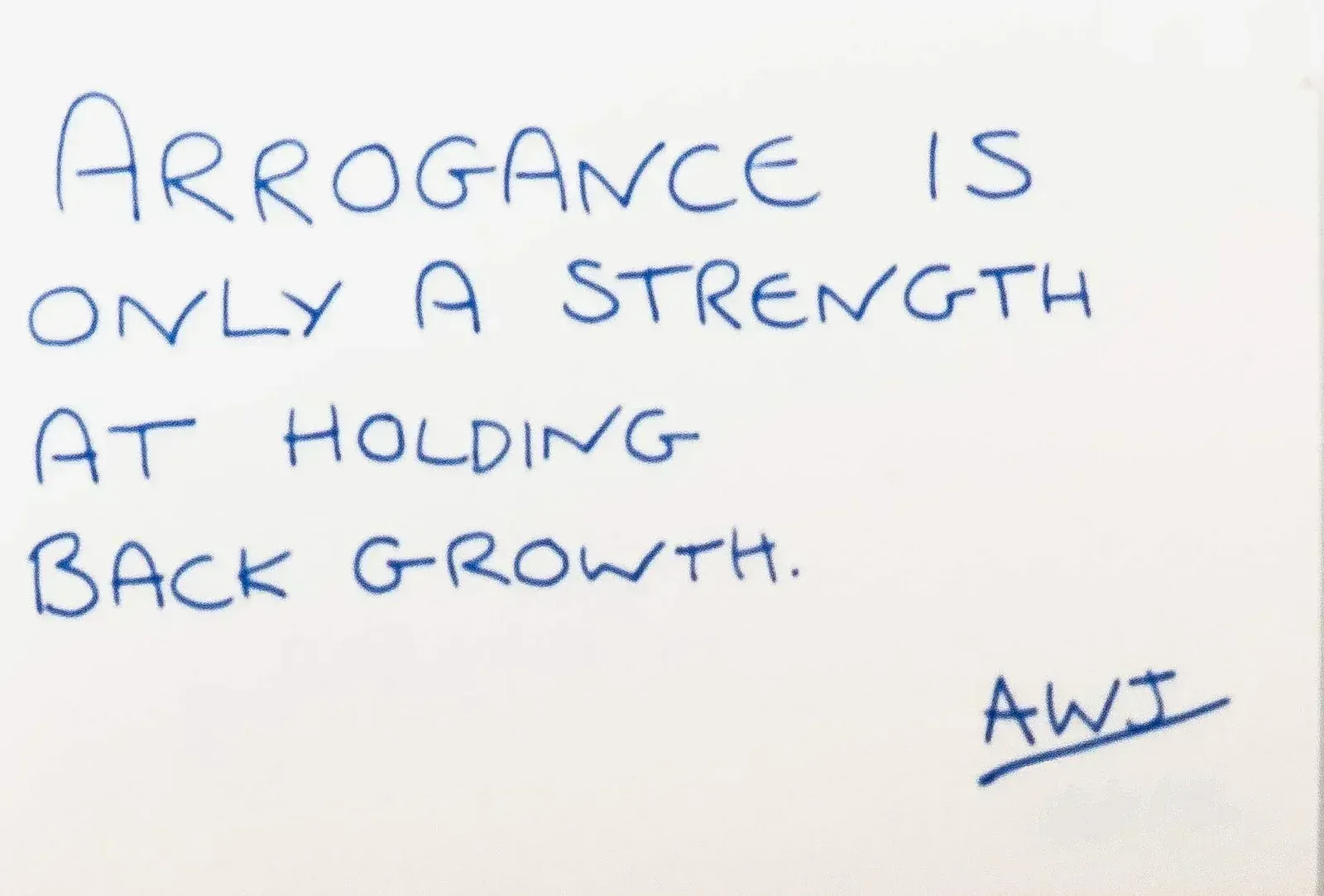
Arrogance is only a strength at holding back growth
A Seller finishes the year at 140% of target and walks into the January kick-off a different person. He stops filling in the MEDDICC fields because he knows his deals. He skips the call reviews because he has heard it all before. He interrupts the new VP in her first meeting to explain how this market really works. By June he is at 30% and telling anyone who will listen that the territory changed.
The territory did not change. He did.
I have watched that arc more times than I can count in twenty years of selling, and I have been the man in it. Never at 140%, sadly, but the mechanics were identical. A bit of success arrived, I decided it was proof of who I was, and I stopped taking anything in.
Arrogance feels like strength from the inside. It feels like certainty. It feels like finally not needing anyone. That is the trick of it, because what you are actually feeling is a door shutting.
What arrogance is good at
Growth only ever arrives from outside you, and it comes through three doors. Feedback, which is somebody telling you something you did not want to hear. Failure, which is reality telling you the same thing less politely. And being a beginner again, which is choosing to be bad at something in public so that you can get good at it.
Arrogance locks all three. It hears feedback as an attack. It files failure under bad luck, bad territory, bad quarter. And it will not be a beginner at anything, because the arrogant person’s whole position rests on already knowing.
So the Maxim is literal. Arrogance is strong at exactly one thing. It holds back growth with a grip nothing else can match. A lazy person can be shaken out of it. A scared person can be encouraged through it. An arrogant person built the wall themselves and is proud of the brickwork.
Confidence is a different thing, and you need to be able to tell them apart. Confidence is a conclusion drawn from evidence, and it stays open to new evidence. Arrogance is confidence that has stopped taking evidence. Confidence takes the feedback. Arrogance takes offence.
Where it shows up
In a deal, it is the Seller who tells the forecast call that the Economic Buyer’s silence is a formality. In a leadership team, it is the VP who has run the same playbook for eight years and calls every idea from the floor naive. In a founder, it is the one who dismisses the new competitor as a toy, twelve months before the toy takes the account.
More than 35,000 people have been through the MEDDICC Masterclass. The ones who get the least from it tell you inside the first ten minutes that they already do all of this. Sometimes they do. They still get the least from it, because the day was never going to get past the door.
The cruel part is that arrogance usually arrives with a track record attached. You earned the right to be sure. That is what makes it so hard to spot in yourself: the evidence for your certainty is real. It is just old.
The audit
Three questions. Answer them honestly and you will know where you stand.
When did you last lose an argument with someone junior to you and say so out loud?
When did you last choose to be bad at something new, somewhere people could see?
When did someone last tell you something uncomfortable about your work, and what did you do about it in the following week?
If the answers are “I can’t remember”, “nothing recently” and “I explained why they were wrong”, you have found the wall. Humility as a pose will not take it down. Reopening the doors will. Ask for the feedback you have stopped receiving. Pick one skill to be a beginner at this quarter. Treat your next failure as information rather than injustice.
The people still growing at fifty were sure of themselves all along. They just never stopped taking the evidence in.
Which door have you shut, and when did you shut it?