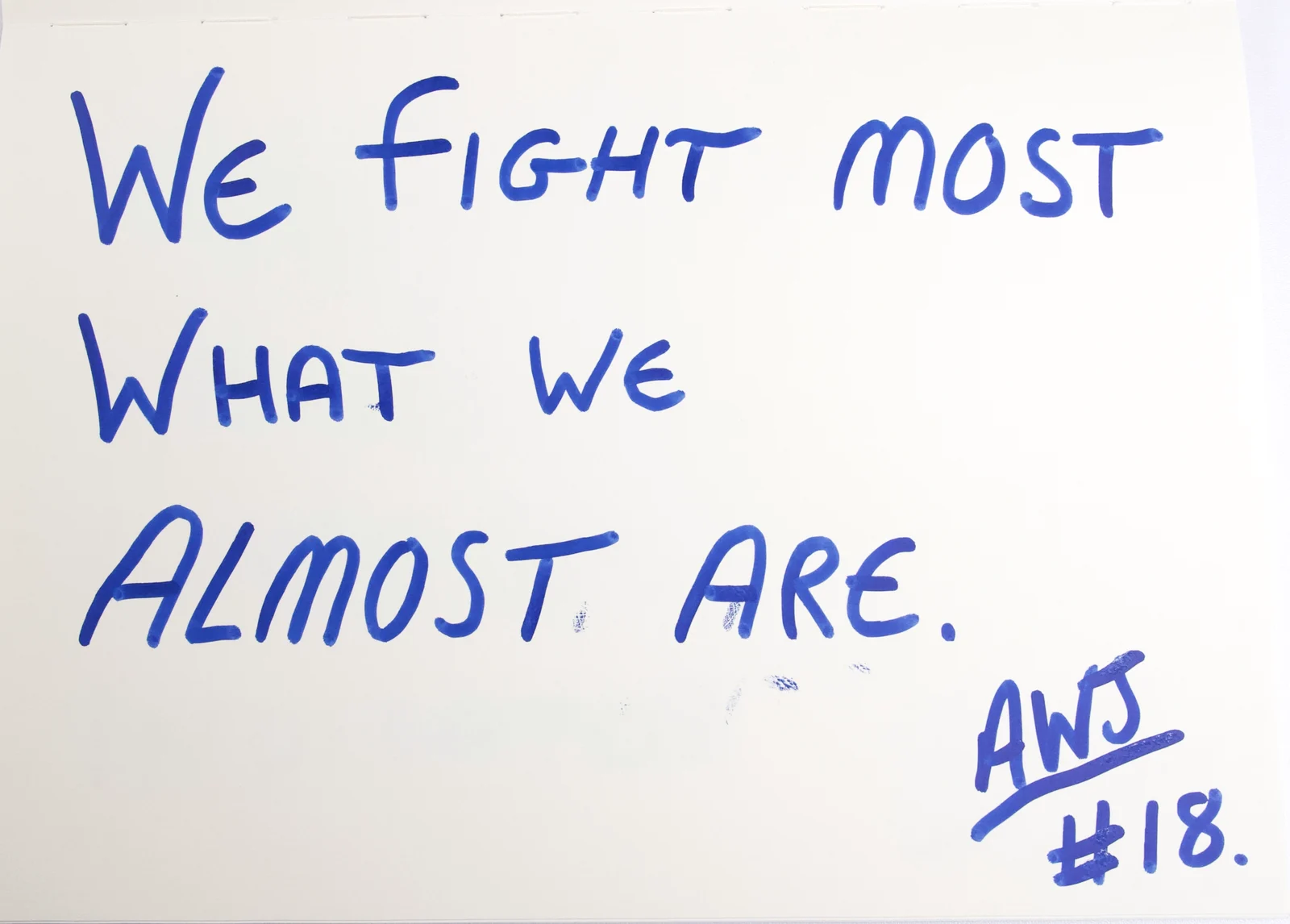
We fight most what we almost are
The post that wound me up most this year was written by a founder bragging about a 4am alarm, a 90-hour week and a team that matches his energy. I read it twice. I drafted a reply and deleted it. I thought about it in the car. A stranger’s post about his alarm clock took an hour of my day.
Then the uncomfortable bit. I know why it landed. I spent most of my twenties believing hours were the score. I have measured my own worth by them more times than I would like to admit, and I have had to unlearn it in public, slowly, over the last decade. He was a version of me with worse timing.
Indifference is the sign of true distance. You do not fight what you have nothing in common with. You ignore it. The things that get under your skin are the things you recognise.
The narrow band
Freud called it the narcissism of small differences. The fiercest hostility runs between groups that are nearly identical, and the gap gets all the attention while the overlap gets none. Watch two sales methodologies argue on LinkedIn. Watch two founders in the same category at a conference. Watch two siblings.
Think of it as a band. Far from you, nothing. You feel no heat about a trait you have never had. Identical to you, nothing again, because you cannot see it. The fight lives in the narrow band in between: the trait you nearly have, the trait you used to have, the trait you have and have not admitted yet.
That is why your strongest reactions are so useful. Your irritations are a map of your own edges. Every disproportionate reaction is pointing at something.
Where it costs you
In a sales team, the manager who is hardest on one rep is usually looking at his younger self. That rep gets the harshest reviews, the sharpest comments in the pipeline meeting, the least patience. Everyone else in the room can see it. The manager calls it high standards.
In a deal, the competitor you obsess over is the one the customer cannot tell apart from you. The one in a different category gets a shrug. The one with the same positioning, the same three slides and the same reference customers gets the whole team’s attention and most of the venom. Your anger is telling you the differentiation is missing. That is a positioning problem, and venom will not fix it.
And in how you carry yourself, the trait you mock loudest in others is the one you are least sure you have shed. I have written more than one post taking apart the self-congratulatory LinkedIn headline. I know exactly how the pull works. That is why I can describe it so precisely.
Using it
Next time you feel the heat rise over someone, do two things before you react.
First, measure the reaction against the offence. If a stranger’s post has had an hour of your day, the hour is the data. The post was never worth it. Something in you was involved.
Second, name the overlap. Write down the trait that is annoying you, in one line. Then write down when you last showed it yourself. Not whether. When. You will nearly always find a date.
Once you have the date, the fight loses most of its energy. You are no longer defending the border between you and them. You are looking at a trait you share and deciding how much of it you want to keep. That is a question you can work on. Fighting the other person was never going to change anything about you.
The people you are indifferent to teach you nothing. The people you cannot stand are a reading list.
Who do you fight hardest, and what do the two of you have in common?